
Relational Agency and AI in Schools: Why the Most Powerful Tool in the Classroom Isn't AI
Schools are navigating AI, polarization, climate anxiety, and misinformation, often all at once and without a shared playbook. The instinct in moments like this is to reach for control: a new ban, a new curriculum, a new policy document. Some of those things have their place, but none of them is sufficient on its own. What this moment calls for is intergenerational partnership: adults and young people in a school community making decisions together.
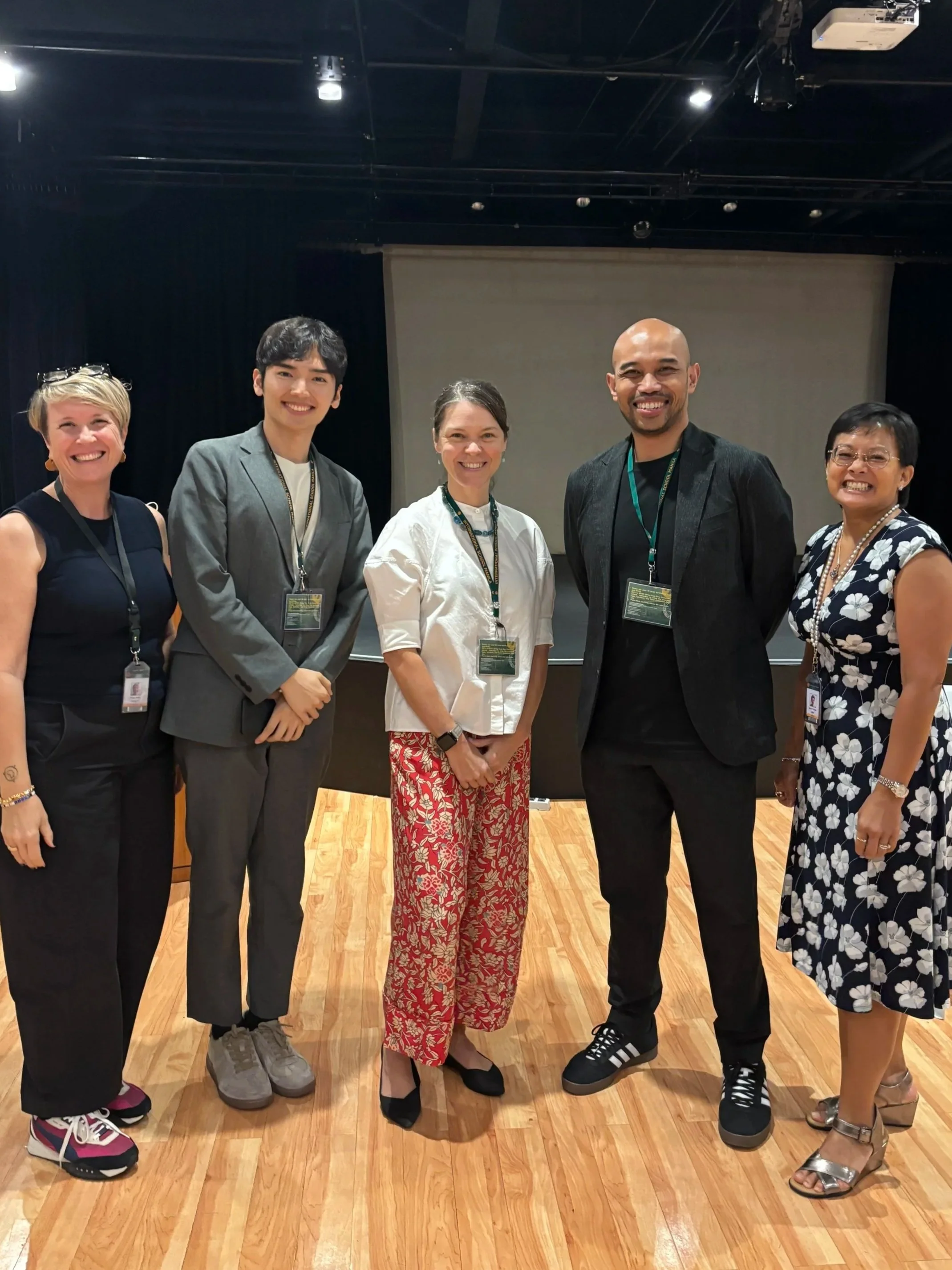
That was the focus of a session I co-presented last week at International School Manila with Dr. Justin Zhang and Dr. Eeqbal Hassim, on AI and student agency. Justin spoke to individual agency, how students build the skills and judgment to use AI well on their own terms. Eeqbal spoke to contextual agency, how culture and context shape critical thinking around AI. My piece was relational agency: what happens between teachers and students when they navigate AI together.
I'm borrowing here from Jenny Anderson and Rebecca Winthrop's definition of student agency in The Disengaged Teen. Building on that, I define relational agency as the capacity of students and teachers to make decisions and act on them together, in ways that matter to the community.
Partnership like this is a harder sell than it should be, mostly because we underestimate teenagers. David Yeager's research on adolescent development, along with a broader body of work in the field, points to a consistent profile: teens have a sharp sense of justice, they want to contribute and be respected, they can focus intensely on what they care about, and they're motivated by helping others (Yeager, 2024). They also have very little tolerance for inauthenticity. That's a profile suited to genuine partnership.
Rebecca Winthrop's recent piece for Brookings makes a concrete case for what that partnership could look like. As she puts it, "the goal should not be to occasionally consult students on AI-related ideas but to have students beta-test products, lead conversations around AI use, review procurement contracts, or test teachers' assignments for AI hackability" (Winthrop, 2026). Winthrop's larger argument is that schools need to move toward shared responsibility, where students help define problems and design solutions.
But partnership doesn't happen just because a school wants it to. Being in relationship with adults is not the same as sharing influence with adults. That distinction comes from a 2015 study by Zeldin, Christens, and Powers on youth-adult partnerships across the US, Portugal, and Malaysia (Zeldin et al., 2015), and it's the crux of the issue. A lot of schools have relationship. Fewer have partnership. The research on effective intergenerational relationships is fairly consistent on what closes that gap: partnerships are strongest when adults share authority, listen seriously, guide without controlling, and create the conditions for young people to genuinely matter. That requires real recognition and respect, and a deliberate effort to create space for young people's voice. Get that right, and the outcomes are resilience, empowerment, the ability to imagine new possibilities, and trust.
Get it wrong, and there are two familiar failure modes, both of which I'd file under Mentor Mindset's Enforcer and Protector. The Enforcer response to AI is strict rules and a focus on compliance, and it pushes kids into the shadows. The Protector response tries to save kids from AI entirely, which robs them of the grappling they need to do. Neither builds the muscle young people actually need.
The cost of getting this wrong is significant. When we partner with kids, we model the transparency we're asking for in return. Without that partnership, we get an erosion of trust, students using AI in the shadows, and young people underprepared for a world that needs their creativity and initiative.
Andreas Schleicher, Director for Education and Skills at the OECD, made a related point at the PISA 2025 launch last week. The biggest rise in his data since 2022 is time spent on Instagram and TikTok. The biggest fall is students creating their own digital content. From creating to consuming, from producing to scrolling, as he put it. That shift matters here because it's the same dynamic playing out at scale: young people treated as an audience rather than as partners tend to disengage, whether the subject is social media or AI policy at their own school. His conclusion is the one I keep coming back to: "Perhaps, after all of this discussion about devices, one of the most important technologies for learning is remarkably old-fashioned: an interested teacher, a supportive family, a young person who knows that someone cares about what they are learning and who they are becoming."
That's relational agency. And it's still the most powerful tool we have in classroom .
References
Winthrop, R. (2026, August 18). Enhancing student agency through school AI councils. Brookings.
Yeager, D. (2024). 10 to 25: The science of motivating young people: A groundbreaking approach to leading the next generation and making your own life easier. Simon & Schuster.
Zeldin, S., Christens, B. D., & Powers, J. L. (2015). The cross-national validity of youth-adult partnerships as a mechanism for youth development and community change: A study of youth in the United States, Malaysia, and Portugal. Journal of Adolescent Research, 30(6), 661-692.
